

Define Problem Statement
A well-crafted problem statement is the foundation of every successful exploration. It captures the strategic fork in the road your team faces and guides all subsequent discovery work. This guide walks you through creating a problem statement using Ritual’s AI-powered workflow.
Start a new exploration
Begin your journey by creating a new exploration in your workspace. This can be done from your General Workspace or within a Project Workspace.
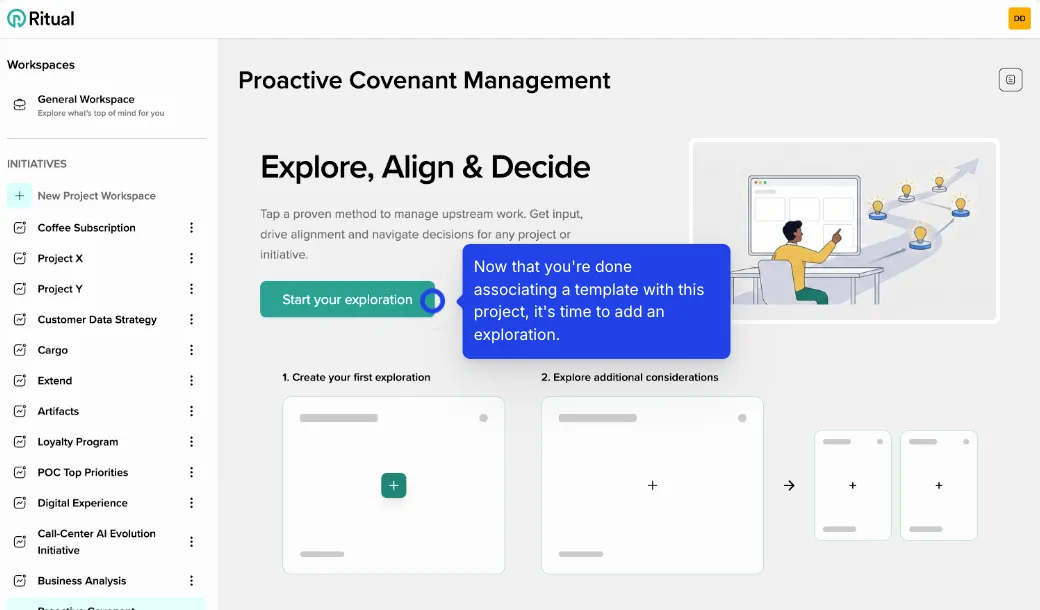
Enter your initial problem or objective
Start by entering the raw idea, challenge, or objective you want to explore. Don’t worry about perfect phrasing—Ritual’s AI will help you refine and structure it.
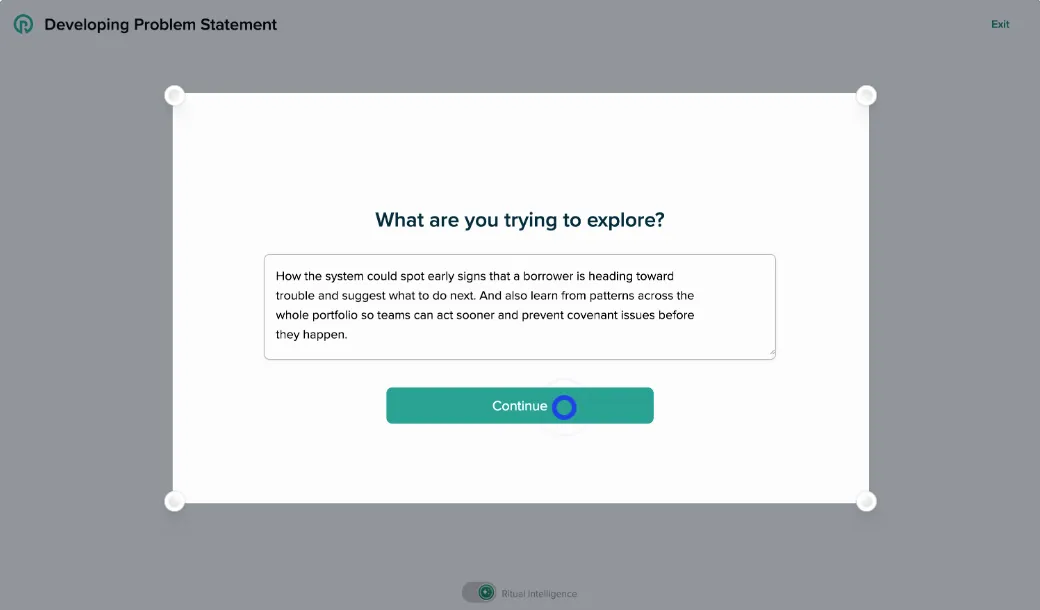
Tips for initial input:
- Be specific about the decision or challenge you’re facing
- Include context about why this matters now
- Mention any constraints or key considerations
- Focus on the “fork in the road” moment requiring exploration
Review AI-generated considerations
Based on your input, Ritual AI analyzes your problem and surfaces key considerations—the critical factors that should shape your exploration. These represent different “attack vectors” for understanding your problem.
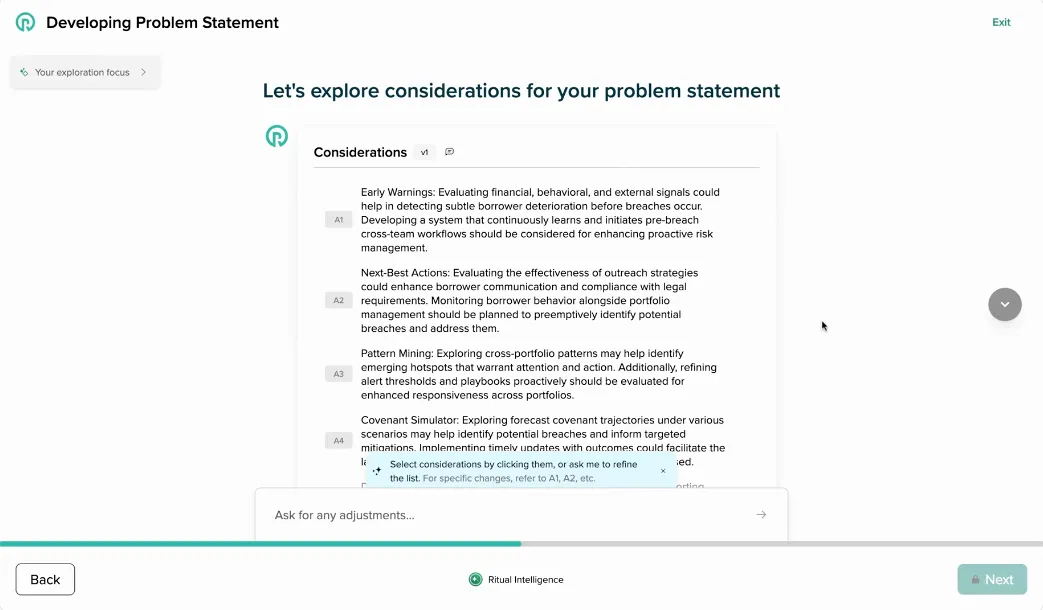
Select relevant considerations
Choose the considerations most relevant to your exploration. Each selected consideration will help shape the discovery questions and ensure comprehensive coverage of your problem space.
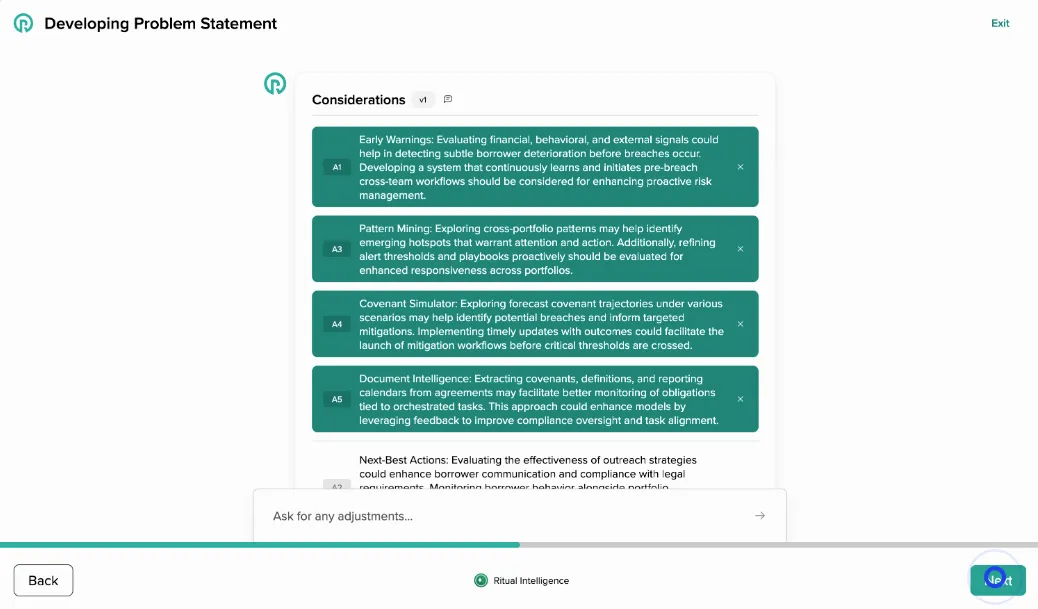
What makes a good consideration:
- Directly relevant: Addresses a core aspect of your problem
- Actionable: Can be explored through specific questions
- Distinct: Covers a unique angle not addressed by others
- Measurable: Can lead to concrete insights
You can also add custom considerations if important aspects are missing from the AI suggestions.
Review and refine your problem statement
Ritual transforms your input and selected considerations into a structured problem statement with clear objectives and constraints. Review this carefully as it will guide your entire exploration.
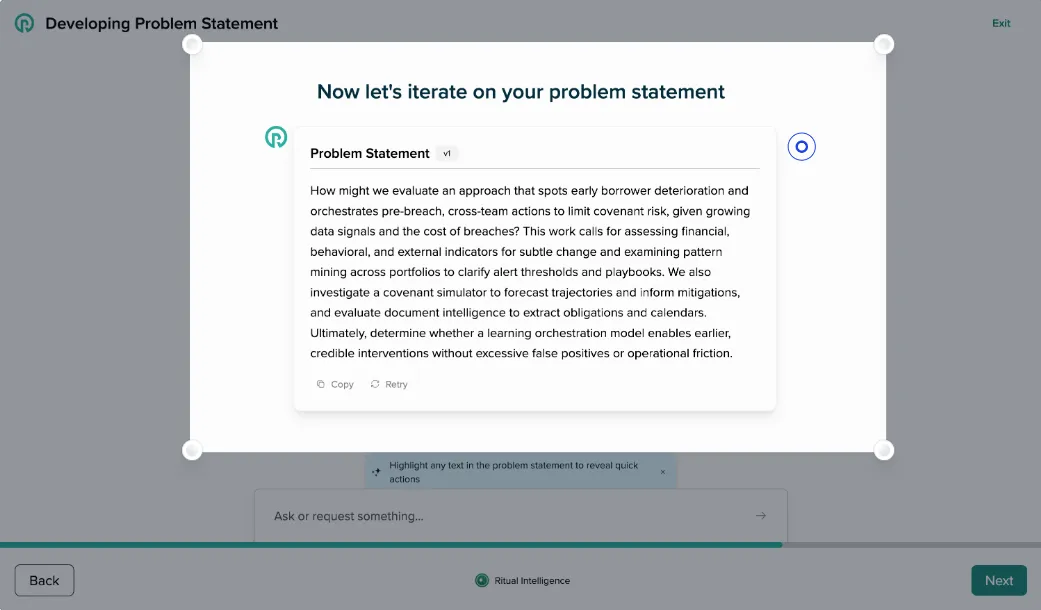
Key elements to check:
- Clarity: Is the core challenge clearly articulated?
- Scope: Are boundaries and constraints well-defined?
- Objectives: Are success criteria evident?
- Altitude: Is it strategic enough to warrant exploration?
Finalize your problem statement
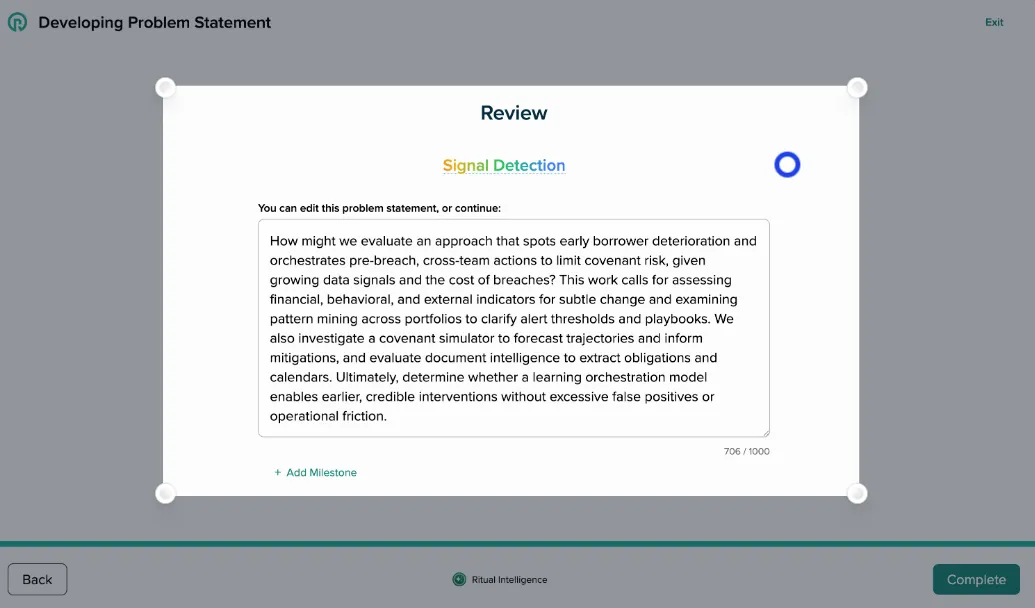
Make any final edits to perfect your problem statement. You can also customize the exploration name to make it easily identifiable in your workspace.
Place in your workspace
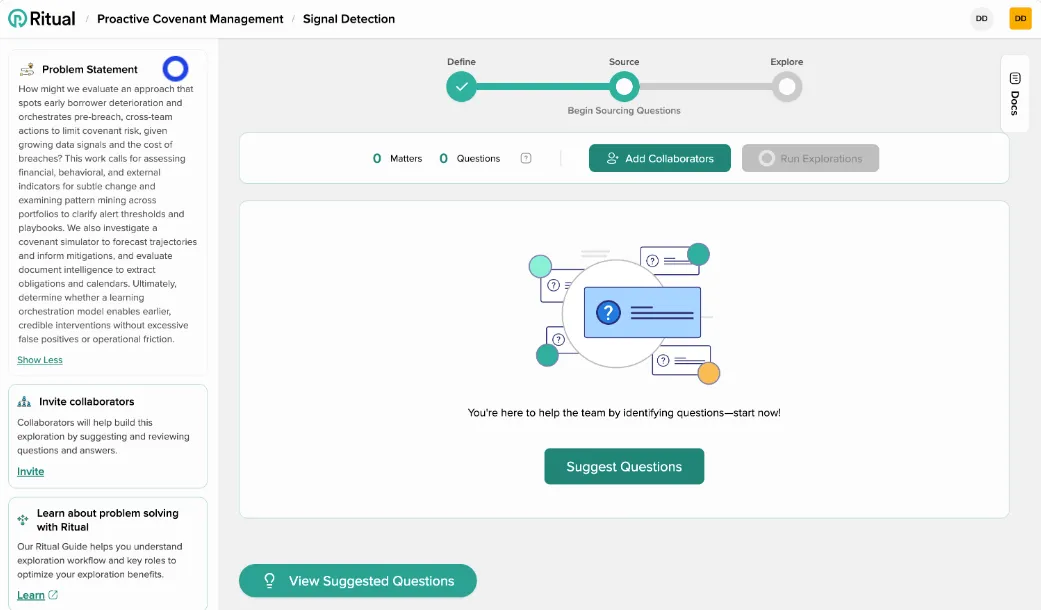
Your exploration is now ready to begin. It will appear in your workspace where you can proceed to the sourcing phase.
Best practices for problem statements
Next steps
With your problem statement defined, you’re ready to:
- Set up a sourcing period to gather discovery questions
- Invite collaborators to contribute their perspectives
- Begin the systematic exploration of your problem space
Remember: The quality of your problem statement directly impacts the quality of insights you’ll generate. Take time to iterate until it captures the true essence of what you need to explore.